Visiting the Pompeii Archaeological Park is a unique experience for anyone who loves history, archaeology and art.
But what if you want to share this adventure with your faithful four-legged friend? Here is a practical and detailed guide to visiting Pompeii with your dog, in full compliance with the regulations of the Archaeological Park, along with useful tips to ensure your dog’s comfort and well-being.
Are Dogs allowed in the Pompeii Archaeological Park?
The answer is yes, but with some significant limitations. Small animals (up to 10 kg in weight and a maximum height of 40 cm) are allowed at the Pompeii Archaeological Park, as long as they are kept on a leash at all times.
If you decide to enter any archaeological buildings with your dog, keeping your dog inside the archaeological buildings is mandatory. In addition, it is essential always to pick up your pet’s droppings to preserve the cleanliness of the area and respect other visitors.
Rules and Restrictions: What to Know Before you Go

- Mandatory leash: The dog must always be on a leash, both outdoors and indoors, where it may be necessary to hold the dog.
- Size and weight allowed: Small dogs (up to 10 kg and a maximum height of 40 cm) are permitted entry.
- Exceptions for guide dogs: Large animals are not allowed unless they are guide dogs for assistance to the disabled. In that case, special certification attesting to the disability must be presented.
- Droppings Collection: Ensure you always have hygienic bags to collect your dog’s waste.
- Beware of stray dogs: Stray dogs may occasionally be encountered within the Archaeological Park. It is advisable to keep your pet at a proper distance and pay full attention to avoid any inconvenience.
Practical Advice for the Visit
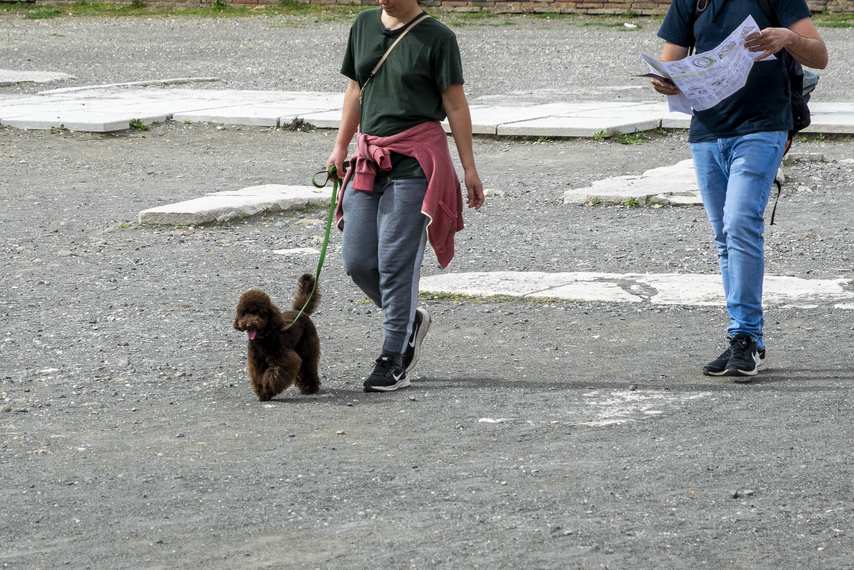
- Avoid the hottest hours: Especially during the summer, Pompeii Archaeological Park can be very sunny, and the paved surfaces may get hot. Plan your visit in the early morning or late afternoon.
- Always bring water for your dog: Keeping your dog hydrated is essential, especially in the summer months.
- Check your dog’s papers: Before you leave, check that your dog has a microchip, an up-to-date health record, and current vaccinations.
- Plan the route: The Pompeii Archaeological Park is extensive. Plan which areas to visit so your four-legged companion is not overly fatigued.
- Respect other visitors: Not everyone likes animals or may be intimidated by them. Always keep your dog under control so that everyone has a peaceful visit.
- Beware of cats: A fair number of cats live in the Pompeii Archaeological Park. Some pad through the streets, while others sleep inside ancient houses. If your dog tends to fidget in the presence of cats, be prepared to restrain him to avoid unpleasant situations.
Accessories to Bring with you and Practical Tips
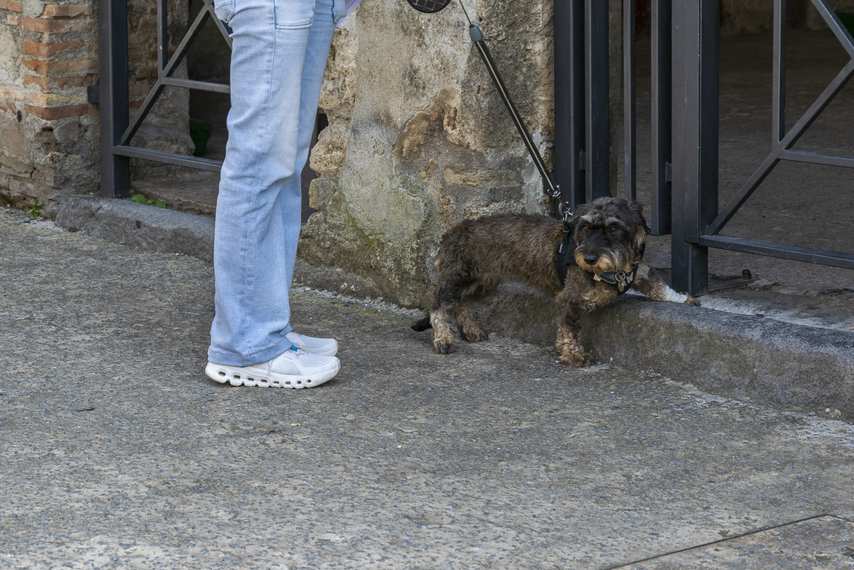
While it is likely that many pet owners already know the basic accessories, here are some tips to ensure you have everything you need:
- Collapsible bowl and enough water:
- A collapsible silicone bowl is lightweight and convenient to carry. Combined with a water bottle, it will allow you to water your dog at any time, especially on hot days.
- A collapsible silicone bowl is lightweight and convenient to carry. Combined with a water bottle, it will allow you to water your dog at any time, especially on hot days.
- Comfortable leash and harness:
- A well-adjusted harness can provide more comfort than a collar, especially if the visit is prolonged.
- Use a leash appropriate to your dog’s size and temperament to keep him under control at all times.
- If visiting during evening hours or with less light, a reflective accessory will improve safety and make your dog more visible.
- Pet First Aid Kit:
- A small kit can be very handy in case of the unexpected. Include gauze, disinfectant, and tweezers (for removing thorns or foreign objects from paws).
- A small kit can be very handy in case of the unexpected. Include gauze, disinfectant, and tweezers (for removing thorns or foreign objects from paws).
- Plenty of hygiene bags:
- The Pompeii Archaeological Park is a place of extraordinary historical value and must be preserved. To collect your pet’s droppings, bring more bags than you might need.
- The Pompeii Archaeological Park is a place of extraordinary historical value and must be preserved. To collect your pet’s droppings, bring more bags than you might need.
- Paw protectors or coat (depending on the season):
- Protective booties: useful in summer to prevent paw pad burns from hot surfaces.
- Lightweight coat: ideal in winter or rain, especially for more delicate breeds.
- Valid documents and contacts:
- Bring your dog’s vaccination booklet and any required health certificates with you.
- Inquire about the presence of a veterinarian near the Pompeii Archaeological Park in case of an emergency.
Note on Parking and Tickets
- Dedicated parking lots: Near the main entrances (Porta Marina, Piazza Anfiteatro, and Piazza Esedra), there are private parking lots and areas. Be sure to choose a parking lot that allows for a short walk to the entrance so you don’t exhaust your dog before you even begin your visit.
Important recommendation: Avoid leaving your dog in the car, even for a few minutes. Especially on sunny, hot days, the temperature inside the vehicle can quickly rise to dangerous levels, putting your pet’s health and life at serious risk. It is preferable to take him or her with you at all times, even while you are waiting in line at ticket counters, so that he or she has adequate air and comfort. - Tickets: Entry to the Pompeii Archaeological Park requires a valid ticket. Consult the official website or the park’s information channels to stay informed about the updated regulations regarding animals allowed in Pompeii.
Conclusions
Travelling with a dog in Pompeii is possible and can be an unforgettable experience, as long as you follow the rules and show common sense.
Remember to respect the rules about dogs allowed in Pompeii, always remember the possible presence of stray dogs, and bring everything you need for your four-legged friend’s comfort and safety.
With good preparation, you and your dog can enjoy the timeless charm of one of the world’s most famous archaeological sites.
FAQ About Visiting Pompeii with Your Dog
You can visit Pompeii with your dog, but only if it is small: the dog must weigh up to 10 kg and not exceed 40 cm in height. In addition, you must always keep him on a leash and hold him if you enter any archaeological buildings.
A leash is compulsory in every outdoor and indoor area (in the latter case, the dog must be held). It is essential to pick up your pet’s droppings using hygienic bags. Large dogs are not allowed, except guide dogs for assistance to the disabled, with the appropriate certification.
To ensure your four-legged friend’s well-being during the visit, bring a collapsible bowl and plenty of water to keep your dog hydrated, a comfortable leash and harness (preferably with reflective elements for visits during low-light hours), a pet first aid kit (helpful in case of minor accidents), plenty of hygiene bags, and, if necessary, paw protectors such as booties or a light coat, depending on the season.
It is advisable to avoid the hottest hours, planning your visit in the early morning or late afternoon, to prevent overheating the surfaces and your dog. Plan the route, choosing the areas to visit to avoid tiring your pet, as the Pompeii Archaeological Park is very extensive. Check your dog’s documents (microchip, up-to-date health record, and vaccines in order) before leaving.
Not. Leaving your dog in the car is unsafe, even for a few minutes. Temperatures inside the vehicle can rise rapidly, especially in summer, putting your pet’s health at serious risk.
Remember that not everyone likes animals or feels comfortable in their presence. Keep your dog under control at all times and at an appropriate distance from other visitors, especially if stray dogs should also be present in the Park.
Yes, for up-to-date information on the regulations regarding dogs allowed at the Pompeii Archaeological Park, consult the official website or the dedicated information channels. This will ensure that you follow all regulations and have a pleasant and respectful experience of the historical heritage.
If you follow the rules and practical advice, visiting Pompeii with your dog allows you to share the thrill of exploring a unique archaeological site while ensuring your pet’s well-being and respect for its historical heritage. With good preparation, you and your faithful friend can enjoy an unforgettable experience among history, art, and nature.