The Amphitheatre of Pompeii, built around 70 B.C., is one of the oldest and best-preserved amphitheatres in the world. This remarkable structure is essential for visitors aiming to experience Roman life and culture in Pompeii.
Located in the southeastern part of the city, it represents one of the main symbols of the Pompeii Archaeological Excavations, offering visitors a window into the past, including gladiatorial fights, circus games and history.
Where is it located?
Map of Pompeii: Regio II – 5
Google MapsDescription of the Amphitheatre of Pompeii
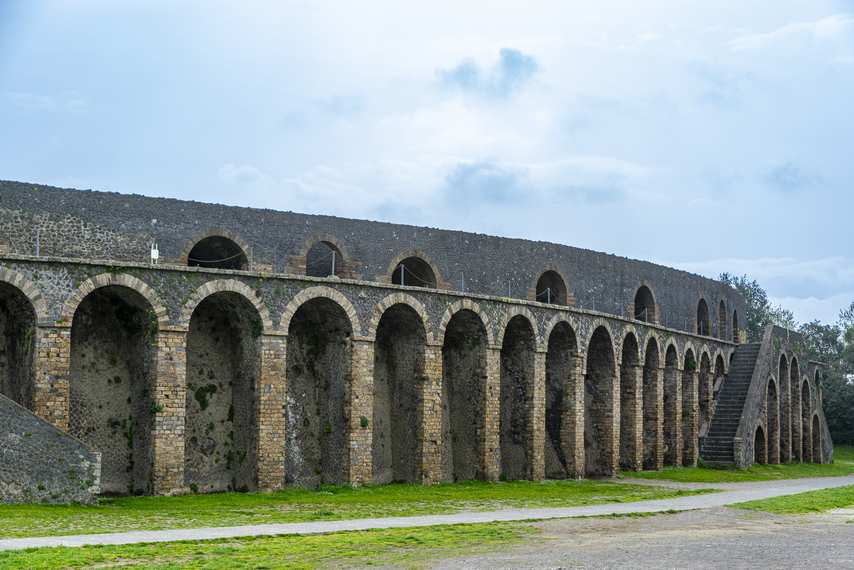
The Amphitheatre of Pompeii is an elliptical building measuring about 135 meters long and 104 meters wide. Built taking advantage of its proximity to the city walls and a natural embankment, the amphitheatre has a structure that is perfectly integrated into Pompeii’s urban landscape.
Main features of the Amphitheatre of Pompeii:
- The cavea: The large spectator area is divided into three sections:
- Ima cavea: the lowest area, with the best view, reserved for the leading citizens.
- Media cavea: reserved for the ordinary people.
- Summa cavea: the upper stands, dedicated to women and the lower classes.
The seating was constructed using tuff stone and wooden elements, elements that testify to both functional and economic care in construction. Protection from the elements was provided by the velarium, a large linen awning that covered the entire structure, offering shade on sunny days.
- The arena, made of rammed earth, was bordered by a parapet decorated with pompeian frescoes. Although these paintings are now lost, they depicted scenes of gladiatorial combat and duels, immersing spectators in the atmosphere of the games.
- Dedicated entrances and spaces: Access to the amphitheatre was via a crypta with four main entrances, two of which led directly to the arena. There were also exclusive passages for magistrates and dedicated areas for gladiators, such as the spoliarii, where first aid was given to the wounded.
History of the Amphitheatre of Pompeii
The Amphitheatre of Pompeii was built by the duumviri quinquennales Gaius Quinctius Valgus and Marcus Porcius, who erected it at their own expense in honour of the colony, as recorded in an inscription engraved on a travertine slab at the building’s entrance:
“Caius Quinctius Valgus, son of Caius, and Marcus Porcius, son of Marcus, as five-year duoviri, as a manifestation of honour for the colony, erected at their own expense the building for entertainments, and appropriated it for perpetual use by the citizens of the colony.”

The duumviri constructed the Amphitheatre of Pompeii quinquennales Gaius Quinctius Valgus and Marcus Porcius to host spectacular public events. At the time, it was primarily used for gladiator fights, one of the most popular forms of entertainment in ancient Rome.
This amphitheatre, with a capacity of about 20,000 spectators, is a masterpiece of engineering and architecture.
In 59 A.D., during one of these spectacles, a violent brawl broke out between the Pompeians and the inhabitants of Nocera, resulting in numerous deaths and injuries.
The episode, narrated by Tacitus, led to the amphitheatre being closed for ten years at the behest of the Roman Senate. However, following the earthquake in 62 AD, the amphitheatre was restored and continued to be used until the eruption of Vesuvius in 79 AD.
During Bourbon excavations in 1748, the amphitheatre was one of the first buildings to emerge from the blanket of ash and lapilli, restoring to the world one of the most extraordinary examples of Roman architecture.
Why visit the Amphitheatre of Pompeii?
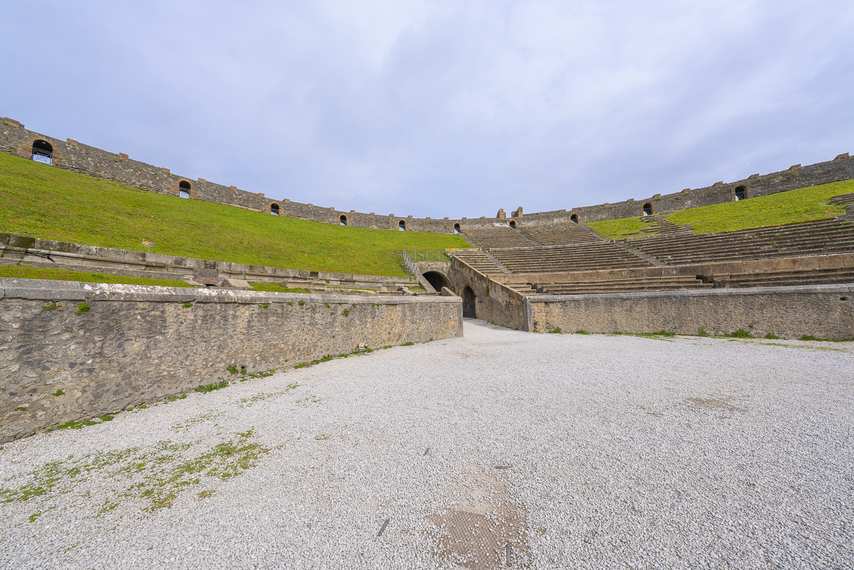
The Amphitheatre of Pompeii is not only an architectural masterpiece, but also a place where stories of courage, glory and tragedy echo. This site is a must-see for anyone wondering what to see in Pompeii or planning a trip to the city.
Some reasons to visit it:
- A journey into the past: The amphitheatre allows visitors to envision the enthusiastic crowds, gladiatorial combats, and the vibrant atmosphere of ancient spectacles.
- A unique experience: You’ll see one of the oldest amphitheatres in Roman history, built long before the Colosseum.
- Ideal for history buffs and photography lovers: The arena provides stunning vistas and a captivating ambience, particularly with Mount Vesuvius as a backdrop.
How to Visit the Amphitheatre of Pompeii
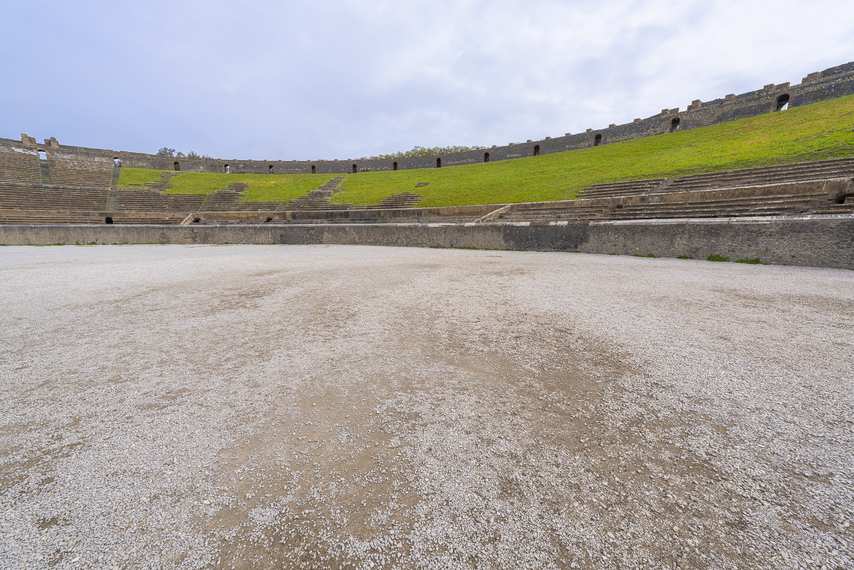
The Amphitheatre of Pompeii, one of the oldest and best-preserved Roman arenas in the world, is located in the southeastern part of the ancient city and a must-see at the Pompeii Archaeological Park.
A visit to the amphitheatre takes about 20 minutes. A walk through the arena and steps will give you a clear idea of the building’s size and its central role in the ancient city’s life.
This majestic structure will allow you to immerse yourself in the public life of ancient Pompeii and imagine the gladiator fights and shows that animated the arena. As you walk through the bleachers, central arena, and access passages, you will appreciate every architectural detail.
Interesting Facts about the Amphitheatre of Pompeii
- A historical brawl: The 59 A.D. episode, featuring a violent quarrel between Pompeians and Nocerians, is one of the most famous events related to the amphitheatre, so much so that it is mentioned in Tacitus‘ texts.
- Unlike the Colosseum, the Amphitheatre of Pompeii lacks an underground hypogeum beneath the arena.
- Strategic choice: Built on the edge of the city to take advantage of the natural embankment, the amphitheatre is an ingenious example of functional architecture.
Conclusion
The Amphitheatre of Pompeii is a unique treasure, a witness to extraordinary events and the greatness of ancient Rome. Whether you are planning a trip to Pompeii or an organised Naples and Pompeii trip, don’t miss the opportunity to walk through the tiers and arena of this historic monument.
Get carried away by the stories of the gladiators and admire one of the most fascinating jewels of the archaeological site.
Book your visit now and prepare for an unforgettable experience in the heart of the Pompeii ruins!
FAQ About the Amphitheatre of Pompeii
The Amphitheatre of Pompeii is one of the oldest Roman amphitheatres in the world. It dates back to around 70 BC and is located in the southeastern corner of the city. Gladiatorial fights, sporting events, and public performances were held here, attracting spectators from all over Campania.
It is a symbol of Roman civilisation and a unique example of urban engineering. With its more than 20,000 seats, it testifies to the Pompeians’ passion for mass spectacles. The stadium takes advantage of the walls’ embankment and the land’s natural slope, blending seamlessly into the city’s ancient urban fabric.
The elliptical structure measured approximately 135 meters in length and 104 meters in width and had an estimated capacity of 20,000 spectators. It was divided into three main areas: ima cavea (for the leading citizens), media cavea (for the people), and summa cavea (reserved for women and the lower classes).
Mostly gladiatorial fights (ludi gladiatorii), wild beast hunts, and other public spectacles. Enthusiastic audiences filled the stands, creating a lively and noisy atmosphere that characterised the festive days in ancient Pompeii.
In 59 A.D., during a gladiatorial show, a violent brawl broke out between Pompeians and Nocerians, causing numerous deaths and injuries. Tacitus mentioned the episode, which prompted the Roman Senate to suspend all activities in the amphitheatre for a decade.
Besides being older, the Amphitheatre of Pompeii lacks an underground area beneath the arena. Moreover, it was built taking advantage of a natural slope, while the Colosseum stands on an artificial esplanade and has complex basements for beasts and stage machinery.
You can stroll through the arena, climb the bleachers and walk the access corridors where gladiators and spectators once moved. Vesuvius in the distance provides a striking backdrop, especially during the quieter hours of the day.
The amphitheatre rises in the southeastern area of the Excavations. From Amphitheatre Square, walk down Amphitheatre Avenue and find it on your right. From Porta Marina, walk down Via dell’Abbondanza to Amphitheatre Alley and follow the signs. It is advisable to spend at least 20-30 minutes exploring it to appreciate its historical and architectural grandeur.
It is one of the most representative sites of the ancient city, where crucial events and the Pompeians’ enthusiasm for gladiatorial shows took place. It perfectly complements an itinerary that includes other must-see sites, such as the excavations, the Forum, the Temple of Apollo, or the House of the Faun.
It was among the first buildings unearthed during Bourbon excavations in the 18th century. In 59 A.D., it was the scene of a bloody brawl with the Nocerini, recounted by Tacitus. It was equipped with a velarium, a linen tent that protected spectators from the sun and rain, demonstrating the Romans’ concern for spectator comfort.