Among the countless wonders of the Archaeological Excavations of Pompeii, the Forum Basilica stands out as one of the most significant and fascinating monuments of the ancient Roman city.
This public building, buried by the eruption of Mount Vesuvius in 79 A.D., offers visitors a fascinating insight into civic, social and political life before the natural tragedy that marked its end. If you are planning a visit to the Archaeological Excavations of Pompeii, the Forum Basilica certainly deserves a prominent place on your itinerary.
Where is it located?
Map of Pompeii: Regio VIII – 2
Google MapsHistory of the Forum Basilica of Pompeii
The Forum Basilica was built in the 2nd century BC as part of the project to monumentalize the city’s forum. Its construction occurred between 130 and 120 BC, a period marked by intense building activity aimed at making Pompeii’s political and commercial centre an example of Roman grandeur.
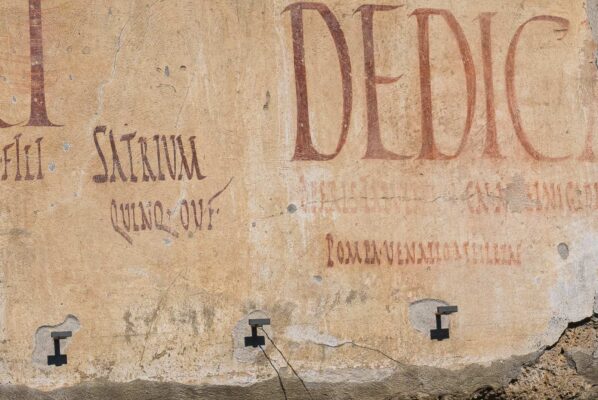
The Forum Basilica was already in use in the first century B.C., as evidenced by a graffito found during excavations, which reads:
“Caius Pumidius Dipilus was here on October 3, in the year of the consulship of Marcus Lepidus and Quintus Catulus.”
This clue confirms the Forum Basilica’s importance as a public and legal activity centre in Pompeii’s daily life.
Architecture and Plan of the Forum Basilica of Pompeii

The Forum Basilica is located in the southwestern corner of the forum and is one of the city’s largest and most monumental structures. Its rectangular plan measures about 55 meters long by 24 meters wide, making it one of the most impressive basilicas in the Archaeological Excavations of Pompeii.
The construction of the Forum Basilica required the demolition of numerous houses and stores and the filling of a hillside to obtain a regular surface.
Main Architectural Elements
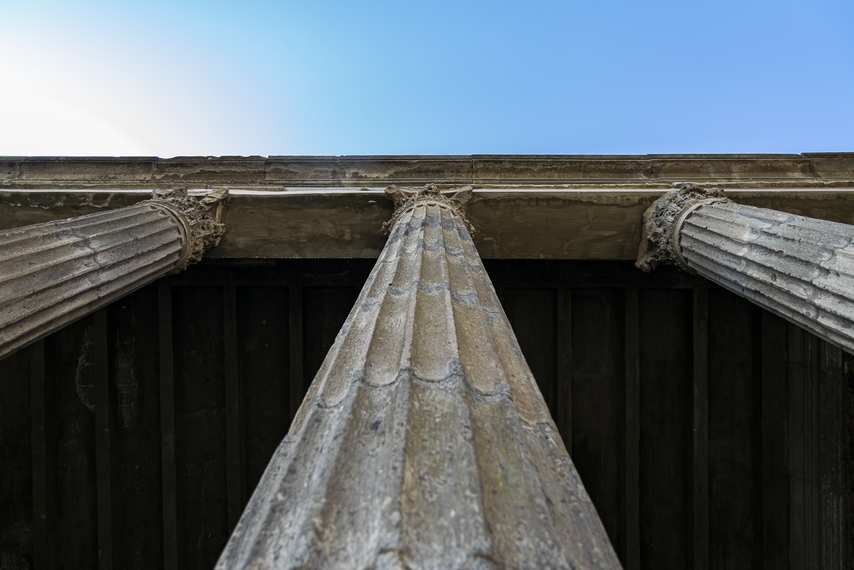
- Portico of Popidius: Located near the main entrance, this portico concealed some irregular buildings on the southern side of the forum.
- Main entrance: Located along the east side, characterised by five doors divided by tufa pillars. Two secondary entrances are located along the north side, directly on Via Marina, and on the south, built in the Augustan age.
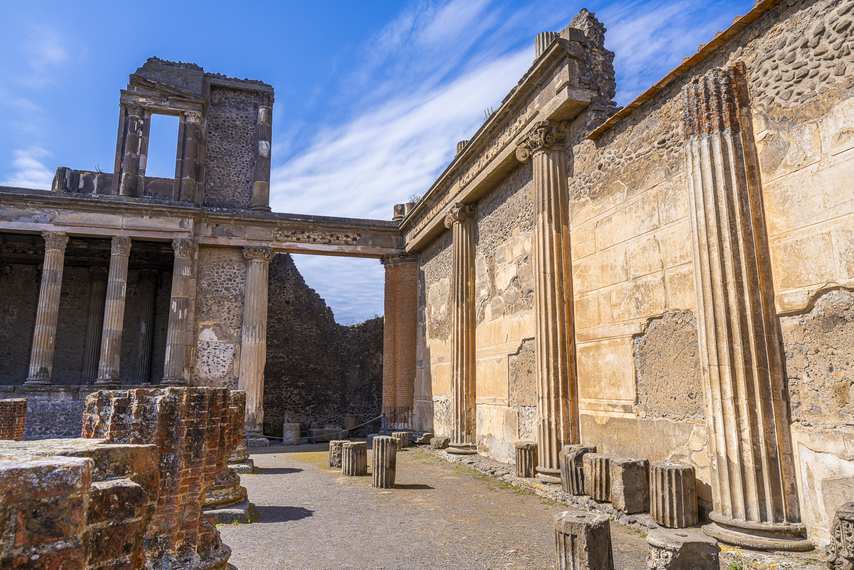
- Central nave and columns: Inside the Forum Basilica, the central nave is surrounded by 28 columns of the Ionic order, about 11 meters high. The side columns are semicircular and positioned along the perimeter walls with Ionic capitals.
- Tribunal: Located along the western side, the tribunal was accessible by a wooden staircase bordered by six columns of Corinthian order. Justice was administered here, divided into two large rooms separated by pilasters.
Functions of the Forum Basilica of Pompeii
The Forum Basilica served two main functions in ancient Pompeian society:
- Tribunal: It was the place where the tasks of justice were administered. Hearings, trials and judicial decisions were held in this monumental space.
- Commercial exchange venue: The Forum Basilica also housed covered commercial activities, providing a safe and sheltered space where citizens could conduct business without fear of the weather.
This dual function made the Forum Basilica an essential hub of Pompeii’s public life, combining civic and commercial aspects into one grandiose structure.
The Decoration and Illumination of the Forum Basilica of Pompeii
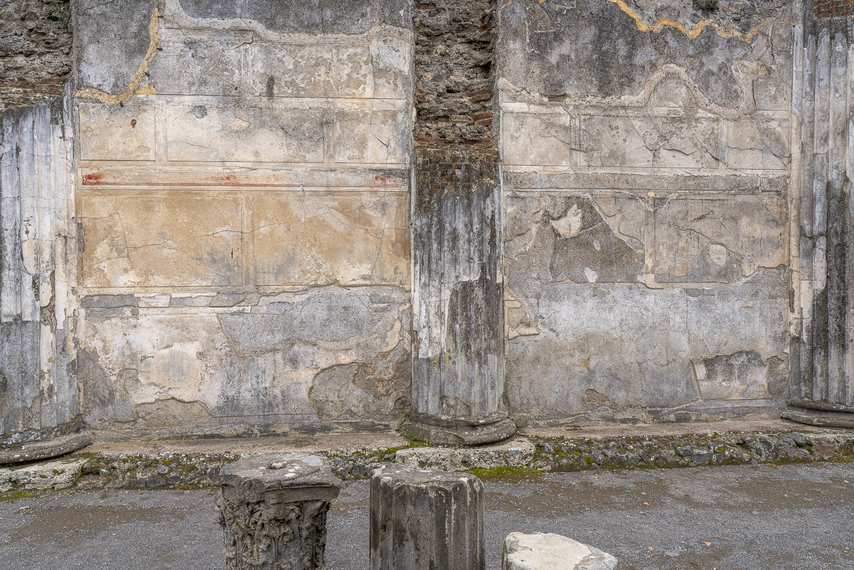
The lighting inside the Forum Basilica remains uncertain, as does its original roof, which presumably must have been double-sloped. Inside, numerous columns and capitals remain, which probably did not belong to the original structure and were inserted later.
The interior walls show few traces of decoration, all done in the early style with stucco in imitation of marble blocks, evoking a restrained and functional elegance.
The Discovery and Research of the Forum Basilica of Pompeii
Buried under a blanket of ash and lapilli during the eruption of Vesuvius in 79 AD, the Forum Basilica was rediscovered in the early 19th century, thanks to excavations promoted by the Bourbon dynasty. Investigations continued at various times until 1950, progressively revealing the function and importance of the Forum Basilica through the discovery of graffiti and internal structures.
The discovery of the Forum Basilica represents one of the highlights of the Archaeological Excavations of Pompeii, as it provided a better understanding of the social and political organisation of the city, as well as valuable information on the legal and commercial practices of the time.
The Forum Basilica of Pompeii today: What to See
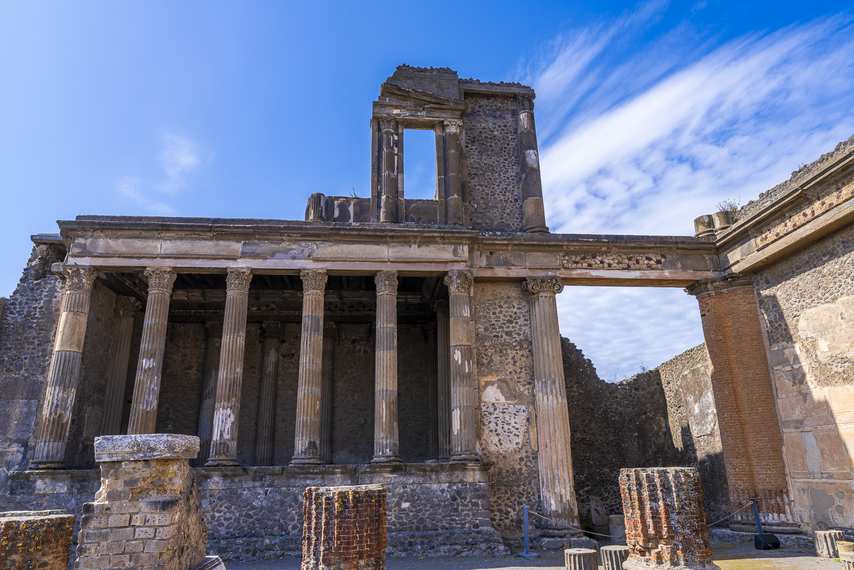
Today, the Forum Basilica is one of the must-see places for those visiting the Pompeii Archaeological Excavations. Here are some of the main attractions you can see during your visit:
- Portico of Popidius: An example of late Republican architecture, the portico offers a fascinating view of Pompeii’s urban organisation.
- Central nave: The majestic Ionic columns and wide open space testify to the grandeur of the structure.
- Tribunal: The division into two large rooms and the Corinthian columns make this area particularly striking.
- Well and fountain: Although no traces of the original fountain remain today, the well that collected rainwater represents an interesting element of water resource management in the Forum Basilica.
- Stucco decorations: The interior walls feature stucco decorations that imitate marble blocks, adding a touch of elegance to the environment.
Why Visit the Forum Basilica of Pompeii?
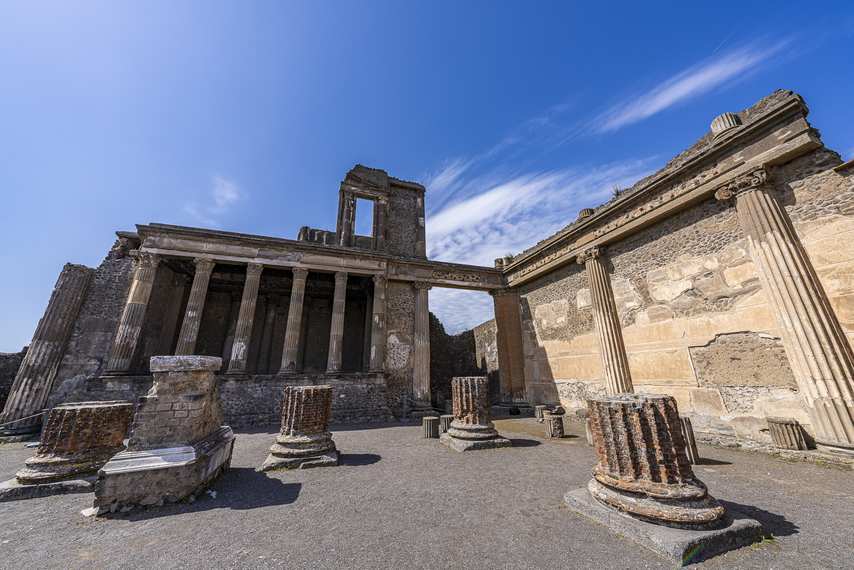
The Forum Basilica is not only a monumental building, but also a symbol of the complexity and sophistication of Roman society. Here are some reasons why you should include it in your itinerary:
- Understand civic and political life: The Forum Basilica offers a window into daily life in Pompeii, showing how civic and commercial functions were integrated into a single structure.
- Admire Roman architecture: The grandeur of the Ionic columns, spatial layout, and construction techniques of the Forum Basilica represent an extraordinary example of Roman architecture.
- Discover history through the remains: Graffiti and interior structures tell stories of real people and their activities, journeying through time.
- Educational and visual experience: A visit to the Forum Basilica is an opportunity to learn more about ancient history in an engaging and visually stimulating way.
Conclusion
The Forum Basilica represents one of the central fulcrums of the Pompeii Archaeological Excavations, providing remarkable insight into the civic and political life of one of the most important Roman cities.
Its architectural grandeur, multifunctional areas, and historical remains make it a must-see for those who wish to immerse themselves in ancient history.
Visiting the Forum Basilica means admiring an architectural masterpiece and understanding the social and political dynamics that characterised Pompeii. This building, a testament to the complexity and sophistication of Roman society, offers tourists a unique opportunity to connect with the past.
The Forum Basilica is a journey through time that allows you to better understand ancient history and culture.
Through its majestic columns, expansive spaces, and understated decorations, the Forum Basilica tells stories of justice, commerce, and daily life at Pompeian society’s heart.
FAQ About the Forum Basilica of Pompeii
The Forum Basilica is a monumental public building in the southwestern corner of the Forum of Pompeii, within the Pompeii Archaeological Excavations. Built between the 2nd and 1st centuries BC, it represented the hub of legal, political and commercial activities in the ancient Roman city before the eruption of Vesuvius in 79 AD.
It was built between 130 and 120 BC. Designed as part of the monumentalization of the forum, the Forum Basilica served two main functions, Tribunal: trials were held here, and justice was administered. Venue for commercial bargaining: Sheltered from the elements, Pompeians could strike deals and bargains in a covered and safe environment.
The Forum Basilica stands on the southwestern side of the Forum, easily reached from the Porta Marina Superiore entrance. Walking down Via Marina, continue towards the Forum, and on the right, you will find the imposing Ionic columns of the Forum Basilica, one of the most recognisable and photographed places in the Pompeii Ruins.
A rectangular floor plan (about 55 x 24 meters) with a wide nave.Ionic columns: 28 columns about 11 meters high surround the nave, providing an imposing setting. The tribunal is placed on the western side, featuring Corinthian-order columns that delimited the space designated for the administration of justice. Stucco decorations: The walls show an “early style” imitation of marble blocks, in keeping with the sober aesthetic of the period.
The Forum Basilica is one of the most remarkable testimonies of Roman architecture related to the civil and political life of the time. Visiting it, you will understand the Pompeians’ daily life, which is divided between commercial affairs and judicial processes.Admire the architectural grandeur: the Ionic columns, the spacious nave, and the tribunal. Immerse yourself in history: Graffiti and architectural features offer glimpses into the lives of two thousand years ago.
Central Nave: A vast rectangular room surrounded by Ionic columns.Tribunal: The access area through a wooden staircase (no longer extant) where hearings were held.Portico of Popidius: Located at the main entrance, it had the function of unifying the southern side of the Forum. Remains of stucco decorations testify to the building’s understated and functional elegance.
One example of graffiti discovered inside the Forum Basilica bears the date “October 3, in the year of the consulship of Marcus Lepidus and Quintus Catulus.” This inscription testifies to the regular use of the Forum Basilica as a public gathering place and centre of civic and judicial activities, revealing details about the people and dates when they frequented this space.
A visit to the Forum Basilica can take between 10 and 20 minutes, depending on how much you wish to explore. However, it is advisable to include it as part of a larger itinerary that includes the Forum of Pompeii and other important monuments (such as the Temple of Jupiter and the Macellum), to better understand the city’s historical and urban context.
The Forum Basilica is close to the Forum of Pompeii, where you can visit the Sanctuary of Apollo and the Temple of Jupiter. The Building of Eumachia is a site of commercial activities and guilds. House of Championnet is a luxury residential complex with panoramic terraces overlooking the gulf and a multi-level structure. Wealthy Pompeian aristocrats inhabited the neighbourhood.
Having been where the main public activities took place, the Forum Basilica reveals: Legal dynamics: Trials, hearings and administration of justice—trade exchanges: Point of reference for indoor bargaining. Roman monumentality: The wide nave, Ionic columns, and architectural style reflect the Romans’ importance to the public sphere. Knowing its function and structure allows for a better understanding of daily life’s customs, social hierarchy and functioning in one of the most important Roman cities of the first century AD.