In the heart of the Pompeii Archaeological Park, the Praedia of Julia Felix emerges as one of the most fascinating and representative buildings of the ancient Roman city.
This expansive property, situated along the Via dell’Abbondanza, offers insights into the daily life, social dynamics, and economic activities of Pompeii before the catastrophic eruption of Mount Vesuvius in 79 AD.
During your visit to the Pompeii Archaeological Park, the Praedia of Julia Felix is worth an in-depth exploration, offering you the opportunity to immerse yourself in the elegance and complexity of one of the most significant dwellings in ancient Rome.
Where is it located?
Map of Pompeii: Regio II – 3
Google MapsHistory of the Praedia of Julia Felix in Pompeii
The Praedia of Julia Felix was originally the residence of Julia Felix, an influential figure in Pompeian society. The property spanned an entire insula, representing one of the largest and most prestigious domus in the city.
After the earthquake in 62 CE, Giulia Felice decided to convert part of her mansion into apartments available for rent and public spaces, such as thermal baths and luxurious gardens. This transformation not only increased the property’s value but also solidified her position as a businesswoman and a prominent public figure in Pompeii.
The origins of the Praedia of Julia Felix date back to the period after Pompeii was founded as a Roman colony following Lucius Cornelius Sulla’s conquest.
The building suffered significant damage during the 62 AD earthquake, but thanks to the resilience of Julia Felix, it was later renovated and expanded. Unfortunately, the eruption of Vesuvius in 79 AD ended this revival phase, burying the property completely under a blanket of ash and lapilli.
Architecture and Description of the Praedia of Julia Felix in Pompeii
The Praedia of Julia Felix is distinguished by its refined architecture and spacious layout, combining residential, commercial, and recreational areas. The property exemplifies luxurious Roman architecture, tailored to accommodate a wealthy and high-status clientele.
The Portico and Garden

One of the most fascinating elements of the Praedia of Julia Felix is the portico. This covered area connects different parts of the villa and provides easy access to the surrounding gardens.
The garden, located at the back of the property, was a serene space for relaxation and recreation, featuring elegant pools, waterfalls, and expansive green areas. This garden not only provided a pleasant environment for the residents but also served as a status symbol of wealth and sophistication.
The Interior of the Villa

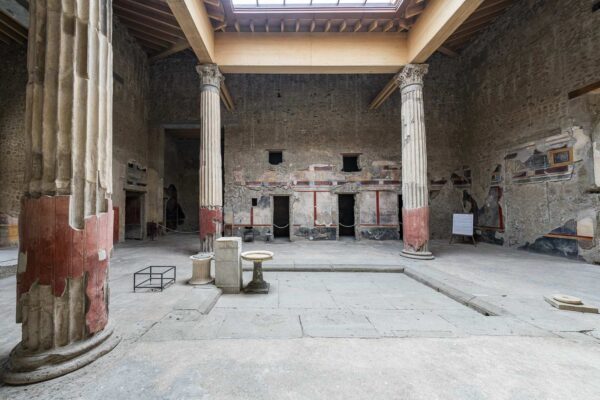
Inside the Praedia of Julia Felix, rooms were organised around atria, inner courtyards that allowed smooth circulation between different rooms.
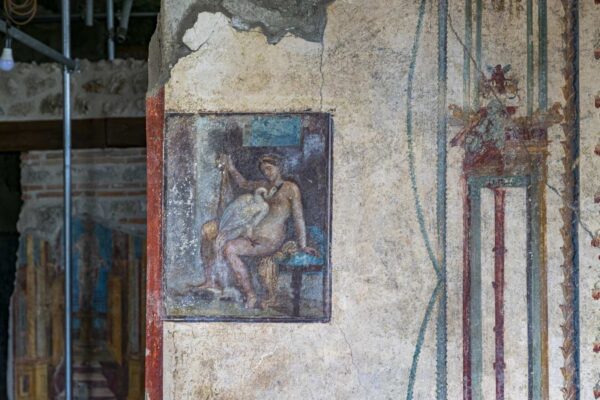
The walls were decorated with high-quality frescoes depicting landscapes, scenes of daily life, and intricate decorative motifs. These frescoes not only adorned the spaces but also mirrored the owners’ artistic and cultural preferences.
The villa’s main rooms included a summer triclinium, an elegant and cosy dining room, and thermal baths. The triclinium was furnished with fine furniture and artistic decorations, making it ideal for dinners and celebrations.
On the other hand, the thermal baths were equipped with marble tubs and sophisticated heating systems, offering a wellness and relaxation experience for residents and guests.
The Baths and Triclinium

One of the most lavish aspects of the Praedia of Julia Felix was the presence of thermal baths and a summer triclinium. The baths were meticulously designed to offer a luxurious and comfortable experience, featuring a calidarium (hot room), a tepidarium (warm room), and a frigidarium (cold room).
The baths featured marble elements and were adorned with frescoes, creating an atmosphere of elegance and refinement.
The summer triclinium served as the villa’s primary dining area, where residents hosted dinners and banquets. This space was furnished with three-sided tables (hence the name “triclinium”), elegant chairs, and artistic decorations that reflected the family’s wealth and good taste.
The walls were adorned with frescoes depicting mythological scenes and landscapes, creating a cosy and sophisticated setting for social occasions.
The Gardens and the Nymphaeum

The garden of the House of Julia Felix in Pompeii stood out as one of the villa’s most beautiful and evocative spaces. This verdant space was enriched with fruit trees, vibrant flowers, small pools, and cascading waterfalls, creating an ideal environment for relaxation and leisure.
The gardens were designed not only for aesthetic beauty but also for functionality, offering shaded areas and open spaces for a variety of activities.
The nymphaeum was a special element of the garden, an artificial grotto decorated with frescoes of nymphs and mythological figures. This space was used for religious rites and ceremonies, as well as a place for recreation and contemplation.
The nymphaeum exemplified integrating natural elements and artistic design, reflecting the Roman appreciation for leisure and aesthetic pleasure.
The Archaeological Excavations of the Praedia of Julia Felix
Praedia of Julia Felix was discovered during archaeological excavations in 1755 under the direction of R.J. de Alcubierre and his assistant Karl Jakob Weber. These early excavations aimed to findtreasures and valuables for the Bourbon royal collection at the Royal Palace in Portici.
Although the building had been stripped of its marble furnishings, Weber managed to draw a detailed plan of the villa, labelling the places from which objects had been removed —an invaluable contribution to the modern reconstruction of the property.
Among the most significant discoveries were a taberna, luxurious baths, and ornate formal dining rooms. These areas revealed the villa’s magnificence and elegance while also providing valuable information about the Pompeians’ daily routines and social activities.
Further excavations between 1912 and 1935 unearthed a sanctuary and the building’s facade. More recent discoveries, between 1998 and 1999, unveiled a nymphaeum with a stepped fountain and a triclinium, providing evidence of modifications made after the 62 AD earthquake.
The Importance of the Praedia of Julia Felix Today

Today, the Praedia of Julia Felix is one of the most important and fascinating sites at the Pompeii Archaeological Park, attracting tourists from all over the world eager to discover ancient Rome’s secrets.
The villa not only testifies to the wealth and elegance of Pompeian society, but also offers a unique insight into Pompeii’s social, economic and cultural dynamics before its destruction.
Integrating residential, commercial, and recreational spaces makes the House of Julia Felix a quintessential example of multifunctional Roman architecture, where luxury and functionality are harmoniously balanced. This building is a testament to the Pompeians’ ability to craft elegant and functional spaces catering to a wealthy and diverse clientele.
What to See During a Aisit to the Praedia of Julia Felix in Pompeii
While visiting the Praedia of Julia Felix, tourists can admire numerous architectural and decorative elements that testify to the grandeur of the villa:
- Atria and inner courtyards: The atria were the heart of the villa, open spaces that connected the different rooms and allowed smooth circulation between the interior and exterior spaces.
- Decorative frescoes: The interior walls, still almost completely covered with frescoes depicting landscapes, offer scenes of daily life and delicate decorative motifs. These paintings give an in-depth look at the artistic and cultural taste of the Pompeians.
- Thermal baths: The baths were one of the villa’s most sophisticated features, featuring marble tubs, advanced heating systems, and elegant decorations. Reserved for residents and high-status guests, they offered an experience of well-being and relaxation.
- Summer triclinium: The main dining room was elegant and welcoming, ideal for dinners and banquets. Artistic decorations and fine furniture created a sophisticated and inviting environment.
- Garden and nymphaeum: The garden was a lush green space enhanced by fruit trees, colourful flowers, pools, and waterfalls. The nymphaeum, an ornate artificial grotto, was used for religious rites and ceremonies and as a place for recreation and contemplation.
Why Visit the Praedia of Julia Felix

The Praedia of Julia Felix is a must-see for anyone who wants to understand the magnificence and complexity of ancient Pompeii fully. Here are some reasons why you should include it in your itinerary:
- Understanding the daily life of Pompeians: The villa offers a window into daily life, showing how Pompeians lived, worked and entertained. The residential areas, thermal baths, and gardens reflect the habits and preferences of a wealthy and sophisticated society.
- Admire Roman architecture: The grandeur of the Praedia of Julia Felix, with its atria, courtyards, triclinium, and baths, represents an extraordinary example of luxurious Roman architecture. The construction techniques and artistic decorations highlight the skill and creativity of Roman architects.
- Discover the frescoes and decorations: The magnificent frescoes that adorn the villa’s walls are a testament to the artistic talent of the period. These paintings offer a unique glimpse into their passions, culture, and aesthetics.
- Immersion in history: The Praedia of Julia Felix tells stories of resilience and adaptation, highlighting how Pompeians coped with natural and social challenges. Its story, from construction to destruction, is a vivid example of the events that shaped the city of Pompeii.
- Educational and visual experience: Visiting the villa is an educational opportunity to learn more about Roman archaeology, ancient construction techniques, and the social dynamics of Pompeii. It is also an extraordinary visual experience because of the beauty and complexity of its structures and decorations.
Conclusion: An Unforgettable Experience in the Pompeii Archaeological Park
The Praedia of Julia Felix represents one of the central fulcrums of the Pompeii Archaeological Park, offering a fascinating insight into the residential, commercial, and social life of one of the most important Roman cities.
Its architectural grandeur, multifunctional areas, and historical details make it a must-see for those wishing to immerse themselves in the history and culture of ancient Rome.
Visiting this place means admiring an architectural masterpiece and understanding the social and economic dynamics that characterised Pompeii.
This building, a testament to the wealth and elegance of Roman society, offers tourists a unique opportunity to connect with the past, making every visit to the Pompeii Archaeological Park an educational and visually stimulating experience.
FAQ About the Praedia of Julia Felix
The Praedia of Julia Felix is a vast residential and commercial complex in the Archaeological Excavations of Pompeii, along the Via dell’Abbondanza. The term “praedia” refers to a type of property that includes dwellings, thermal baths, gardens, and spaces rented out to others. They constituted one of the most prestigious residences in Pompeii, belonging to the wealthy Julia Felix, a prominent figure in Pompeian society.
It is so named because the large complex belonged to Julia Felix, an influential Pompeian businesswoman in the first century AD. After the earthquake in 62 AD, Julia Felix decided to convert part of her residence into public spaces and rent out apartments, increasing the property’s prestige and demonstrating her skill in handling business and trade relations.
This complex, with its residential areas, baths and gardens, represents a clear example of how wealthy Pompeians combined luxury and practicality. It accommodated spaces for domestic life, areas for guests and even commercial premises. Its multifunctional structure reflects Pompeii’s urban evolution and the owners’ ability to adapt to the economic and social needs of the time.
The villa’s architecture embodies Roman refinement, with elegant atriums connecting different rooms, porticoes leading to the gardens, and high-end pictorial decoration. The indoor thermal baths demonstrate the mastery of heating techniques of the time, while the summer triclinium and gardens, featuring fountains and nymphaea, highlight its convivial and luxurious appearance.
Visitors can glimpse remnants of richly hued frescoes with landscape motifs and scenes of daily life. In addition, some marble structures and fragments of furnishings show how every detail was taken care of, from corridors to heated rooms. Despite the looting in previous centuries, these testimonies restore a vivid image of Pompeii’s pageantry.
Having thermal baths (calidarium, tepidarium and frigidarium) inside a domus represented a tangible status symbol. Only the wealthiest families could afford the complex system of furnaces and canals to heat water and rooms. These private baths allowed the owner and her guests to enjoy comfort comparable to that of large public baths, while providing greater privacy.
After the violent earthquake, many domus were redesigned for different purposes. Julia Felix transformed part of the villa into rooms for rent and public spaces, maximising the commercial use of her property. This adaptation showcases the resilience and entrepreneurial spirit of the Pompeians, who were capable of reinventing living spaces to meet new needs.
Entering from Amphitheatre Square, walk down Amphitheatre Avenue past the relevant square. Then, take Amphitheatre Alley, which leads toward Via dell’Abbondanza. You will find signs for access to the Praedia of Julia Felix. It is advisable to use a map of the Excavations or an audio guide to orient yourself among the different archaeological complexes.
In addition to domestic organisation, the villa illustrates Julia Felix’s independent status, showing her as an autonomous woman capable of managing her business affairs. Findings and inscriptions testify to trade, rents and social activities, offering a detailed picture of economic life in pre-eruption Pompeii.
This place offers insight into Roman culture, including luxury, social stratification, and the importance of economic relations in a port and trade hub like Pompeii. Visiting the gardens, thermal rooms, triclinium, and rental rooms, one is immersed in a reality in which aesthetics, functionality, and prestige come together in a surprisingly modern way.
The gardens of the Praedia of Julia Felix at Pompeii were designed as authentic, multifunctional spaces where beauty, relaxation, and religious devotion coexisted harmoniously. Fruit trees and colourful flowers created an environment rich in fragrance and colour, while small pools and waterfalls provided coolness and visual pleasure. Added to this was the charm of the nymphaeum, an artificial grotto decorated with frescoes of nymphs and mythological scenes, symbolising spirituality and love of art. Thanks to these elements, the garden was a green area and a place designed for contemplative pauses, moments of recreation, and even religious rituals, making it unique and particularly evocative.
Book tickets online to avoid waiting in lines at the entrances. Rely on a guide to learn the architectural and historical details. Take a close look at the frescoes and the remains of marble decorations.
It encapsulates in a single complex the main characteristics of ancient Pompeii: architectural grandeur, decorative luxury, the presence of private baths, economic dynamism, and the female imprint in the management of a large property. Admiring it allows one to experience the everyday life of a city suspended in time, where business, worldly concerns, and relaxation meet in a unique balance.