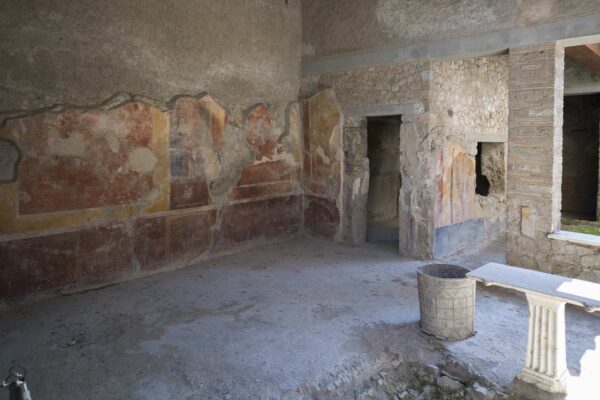
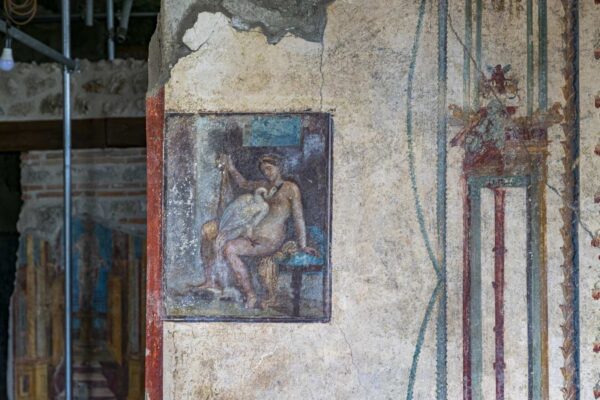
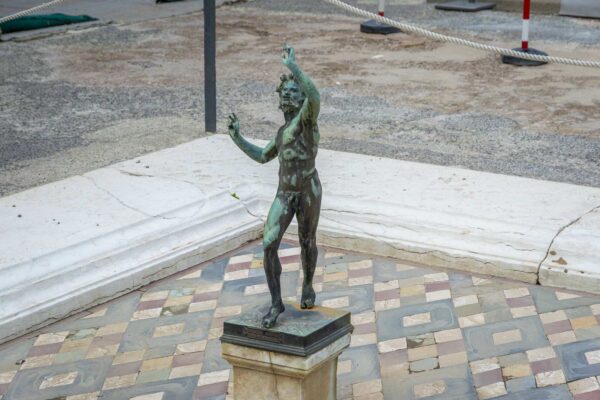
Visiting the Pompeii Archaeological Park is a unique experience: walking among ancient ruins, admiring the mosaics and paintings, and immersing yourself in the atmosphere of a Roman city frozen in time is a privilege that attracts visitors worldwide.
However, those with mobility difficulties may face obstacles that make it complicated to enjoy this extraordinary archaeological area fully.
For this reason, in recent years, the Pompeii Archaeological Park has been creating routes and services designed to ensure that all people, regardless of their physical abilities, can visit the excavations as easily and independently as possible.
This article, which collects and reprocesses information from the official “Pompeii for All” initiatives and other projects dedicated to accessibility, provides practical advice on how to organise your visit best, take advantage of the park’s services, and enjoy a truly inclusive experience.
The aim is to clearly illustrate what strategies to adopt and what tools to use for those who move in wheelchairs or who generally have walking difficulties.
Why Accessibility Matters in Cultural Venues
Before discussing practical solutions, it is helpful to explain why accessibility is so crucial in cultural places such as Pompeii.
While artistic and archaeological heritage represents a collective resource that should be preserved, it is also vital that its enjoyment be as open and inclusive as possible, respecting the needs of all visitors.
An archaeological site like Pompeii, a UNESCO World Heritage Site, must provide services and adaptations to eliminate or at least reduce architectural barriers.
Pompeii Park has adopted an integrated approach over the years, promoting initiatives aimed at:
- Remove architectural barriers that are compatible with the site’s protection when possible.
- Offer simplified information materials and technological aids (e.g., tactile models or guides in facilitated language).
- Provide dedicated escort services and aids such as wheelchairs.
- Collaborate with institutions and associations to make the museum experience appropriate for people with other disabilities (cognitive, sensory, intellectual).
The ultimate goal is to foster a virtuous circle where culture becomes a vehicle for inclusion and well-being, enabling everyone to experience and learn about history, art, and archaeology.
“Pompeii for All”: An Accessible Route without Architectural Barriers
One of Pompeii’s most significant accessibility projects is the Pompeii for All route.
This 3.5-kilometre facilitated route, created as part of the Great Pompeii Project, allows people to cross a large part of the archaeological area, starting from the entrance of Piazza Anfiteatro and reaching the Forum.
Along the route, obstacles and differences in level have been reduced or eliminated, and ramps have been installed to allow wheelchairs (or strollers) to reach and visit several buildings of great historical interest.
Key Features of the Route
- Length: Approximately 3.5 km, with the possibility of intermediate stops and a choice of what to visit.
- Start of the route: Entrance to Piazza Anfiteatro.
- Finish: Forum, heart of the ancient city, with the possibility of exiting later from Piazza Esedra thanks to the elevator at the Antiquarium.
- Accessible attractions: Various buildings and domus of historical and artistic significance, including some of the best-known public houses and structures.
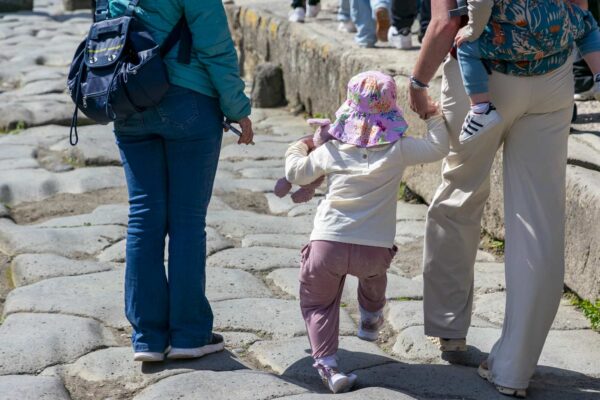
- Soil type: In some areas, the ancient road surface remains unchanged, so there may be stones and surfaces with different levels. However, efforts have been made to facilitate transit through walkways and ramps.
Trail Warnings
Although the route is designed to reduce difficulty, some archaeological site features, such as the ancient cobblestones, can create trouble spots. Here’s what to expect:
- Slopes greater than 8% in some ramps.
- Small steps (elevation jumps of less than 2 inches).
- Sections of old flooring that are not perfectly coplanar.
- Narrow spaces where two wheelchairs may not pass at the same time.
- Absence of wheel bumpers along sidewalks and crossings.
For these reasons, people who use wheelchairs should be prepared to ask for assistance in some places or consider getting help from a companion or friend.
How to get the “Pompeii for All” Map
Pompeii Archaeological Park’s detailed map of the “Pompeii for All” route is available on its official website. It’s great to download and print it out before your visit to study the itinerary, identify any difficult spots, and plan your stops.
Services for Visitors with Reduced Mobility
Wheelchairs
For visitors with reduced mobility who do not have their wheelchairs, Pompeii Archaeological Park provides six folding wheelchairs at the entrances to Piazza Esedra and Piazza Anfiteatro. The service is free, but a reservation is strongly recommended to ensure availability.
- How to book: email pompei.info@cultura.gov.it or call +39 081 8575 347 (infopoint).
- Pickup procedure: You will be asked to leave an ID at the time of pickup.
- When to book: Before arranging the visit, it is best to call or write an email to receive confirmation of the days and pickup methods.
Arrange Visitation Times
Pompeii can be very crowded, especially during the peak tourist season (spring and summer) and on weekends.
For those with mobility impairments, scheduling a visit at less busy times can make a difference: you move around more easily, avoid lines, and reduce your efforts.
Usually, early morning and late afternoon are quieter times. Also, bringing water, a hat, and comfortable clothing is helpful, especially in the summer.
Practical Tips for Visiting
Plan Ahead
Visiting Pompeii takes several hours, partly because the archaeological area is so vast. Studying the “Pompeii for All” route beforehand and focusing on the buildings of most interest helps avoid unnecessary stops on more difficult routes.
To make the most of your time at the site, it’s helpful to know how long a visit usually takes—check out our full guide on how long it takes to visit Pompeii.
If you’re planning to stay overnight, we also recommend our curated list of accessible places to stay in Pompeii, selected for comfort and convenience.
Assess whether Assistance is Needed.
As mentioned, the barrier-free trail tries to be as inclusive as possible, but is not completely obstacle-free.
Suppose a person with a mobility disability does not feel confident tackling any inclines or uneven stretches of paving on his or her own. In that case, it is advisable to have someone willing to provide physical help accompany him or her.
In addition, a companion can be invaluable in interacting with Park staff, asking for directions, or managing the possible use of ramps as easily as possible.
Making Regular Stops
Bringing water and a light snack allows for occasional breaks. At some points along the trail, there are benches, walls or areas to sit and enjoy a break. Taking advantage of these breaks allows you to experience the visit easily, reducing physical fatigue.
Other Aspects of Accessibility in Pompeii
Although this article focuses primarily on the needs of those with mobility impairments, it is worth mentioning that Pompeii Park takes measures to make the site usable by people with various disabilities, including sensory, cognitive, or intellectual disabilities.
Below are some of these initiatives, hoping they may also be helpful to those accompanying people with various special needs.
3d Tactile Models and Braille Supports
For people who are visually impaired or blind, some 3d tactile models are available in some of the site’s environments. For example:
- Near the “House of Ceres”.
- It is in a stable area featuring a model of a horse skeleton discovered during the excavations.
- The tannery area is accessible from Via Stabiana, and tactile aids help visitors understand the process of leather processing in Roman times.
These tactile aids, accompanied by Braille inscriptions, allow visitors to “touch with their hands” some characteristic elements of the excavations, promoting sensory understanding and an inclusive experience.
Cognitive-Sensory Accessibility
Pompeii Archaeological Park is part of several networks and projects aimed at including people with intellectual disabilities and autism spectrum disorders.
Thanks to collaboration with associations and entities such as “L’Abilità Onlus,” the “De Agostini Foundation,” and the social cooperative “Tulipano Onlus,” tools have been created to simplify the use of the site:
- Easy-to-read language guides: These guides are dedicated to people with intellectual disabilities, children, and adults and are available on the official website and at the information offices.
- Augmentative Alternative Communication (AAC) Symbols: a communication system for those with verbal language difficulties, useful for better understanding Pompeii’s history, places and customs.
- Educational internships and inclusive job placements: thanks to social agriculture projects and experimental paths of use of the domus, the Park hosts young people with autism or cognitive disabilities, promoting inclusion and autonomy.
“Museum for all”
Pompeii is part of the “Museum for All” network, conceived in 2015 by L’abilità Onlus and Fondazione De Agostini.
The goal is to make cultural sites accessible to people with intellectual disabilities. On the official websiteof the Pompeii Archaeological Park, it is possible to download guides made with simplified language and CAA symbols; alternatively, a printed version can be requested from the Park’s information offices.
This material, clearly written and enriched with images, makes it easier to follow the tour itinerary, making the experience more enjoyable even for those approaching Pompeii for the first time.
Silent Visits in LIS: A Service for Deaf Visitors
Another step toward accessibility is silent visits in LIS (Italian Sign Language). Thanks to a collaboration with the Ente Nazionale Sordi (ENS) – Naples Provincial Section, deaf visitors can enjoy specific accompaniment from native speakers of deaf LIS.
- Operator Training: The park has specially trained deaf staff to provide appropriate historical and archaeological explanations during the tour.
- How to book: Information and participation forms are available at pompeiisites.org and napoli.ens.it. Alternatively, you can write to napoli@ens.it.
This initiative helps overcome another major obstacle: the language barrier. It offers deaf people the chance to fully grasp the site’s allure and receive detailed explanations in real time.
Other Inclusive Resources: Hug Bike and “Pompeii in Blue”
Hug Bike
Designed for children and young people with special needs, Hug Bikes are available in Pompeii according to a schedule published onpompeiisites.org.
The initiative is curated by young people from the social cooperative “Il Tulipano”. It makes it possible to experience exploring some parts of the site by bicycle, with the safety of a means that allows the child to sit facing the adult, in a real “hug” while pedalling.
This, too, is an opportunity for socialising and sharing the archaeological experience, designed especially for those with mobility impairments or other forms of disabilities that make using a traditional bicycle complex.
“Pompeii in Blue – Journey to the House of Menander”
Again, in collaboration with the Tulipano Onlus social cooperative and the Department of Translational Medical Sciences of the Federico II University, the first interactive visual agenda dedicated to Pompeii was created: “Pompeii in Blue – Journey to the House of Menander.” It is part of the series “Inclusive Museum Routes” and offers interactive activities designed to facilitate understanding and emotional interaction with works of art and ancient places.
This tool is particularly effective for people on the autism spectrum, but also for children or adults with attention difficulties: it helps them remain engaged with what they are observing, thanks to simplified visual and textual supports.
Video Content in Easy-to-Understand Language
An additional inclusion tool promoted by the Pompeii Archaeological Park is video stories. These short multimedia contents illustrate, in a linguistically and visually simplified way, places such as Domus, frescoes, and areas of major interest.
These videos are made under the supervision of associations specialising in overcoming sensory disabilities (e.g., FIADDA Campania) and with the support of the National Speech Book Centre of the National Union of the Blind.
- Video content: Simple explanations, clear narrative voice, and images that emphasise architectural and artistic details.
- Where to find them: Available at the official website pompeiisites.org.
This multimedia communication system makes the visit more engaging, allowing everyone to connect—even emotionally—with the site and Pompeii’s fascinating history.
Final Suggestions
Organising a visit to Pompeii with mobility difficulties requires a little extra planning, but it is by no means impossible. Thanks to the “Pompeii for All” itinerary and services designed for those using wheelchairs, the site is much more accessible than in the past. Here is a summary of the main tips:
- Reserve a wheelchair (if needed) in advance, through the email or phone number of the infopoint.
- Study the “Pompeii for All” map available on the official website to familiarise yourself with the route and identify possible trouble spots.
- Choose off-peak times, if possible, to avoid queues and crowding.
- Bring water, a hat and comfortable clothing to make the visit comfortable, especially in the hot months.
- Consider the help of an escort if you are concerned about difficulties along the more challenging sections or on the ancient cobblestones.
- Take advantage of additional services: tactile guides, Braille maps, LIS tours, video stories, visual agendas, “Museum for All” projects, and so on.
All these initiatives aim to ensure that those without motor or sensory difficulties appreciate Pompeii’s beauty and become a cultural asset fully accessible to everyone. It is important to remember that the archaeological site of Pompeii is a unique context, subject to very stringent conservation constraints.
Therefore, the total removal of any barrier is not always feasible. Still, the direction taken by the Archaeological Park is undoubtedly the right one: investing in ramps, walkways, dedicated services and targeted technological tools, to allow a rich and fulfilling visit, while respecting a place of inestimable historical and cultural importance.
In conclusion, if you are planning to visit Pompeii and are concerned about architectural barriers, you can rest assured that you will find an increasingly prepared environment that is attentive to different needs. Be ready for an itinerary that may require more time and organisation than a “standard” tour.
The guides, staff at the entrances, and volunteers on the route will be able to provide you with the assistance you need to have an unforgettable experience, where the discovery of antiquity goes hand in hand with the belief that culture is a universal right — to be enjoyed without barriers.
For more Information and Updates:
- Pompeii Archaeological Park official website: pompeiisites.org
- E-mail for reservations and general information: pompei.info@cultura.gov.it
- Pompeii infopoint number: +39 081 8575 347
- For visits in LIS: napoli@ens.it and napoli.ens.it
We wish you a pleasant visit. Remember, the wonders of Pompeii await you, and with the proper precautions and services, even people with reduced mobility can fully enjoy the charms of this timeless archaeological city.
FAQ About Accessibility in Pompeii
The “Pompeii for All” route is designed to ensure optimal accessibility. It stretches over 3.5 km, starting from the entrance of Piazza Anfiteatro and arriving at the Forum. There are ramps, walkways and barrier-free areas, although some ancient surfaces may be uneven.
Yes, the Park provides six folding wheelchairs free of charge at the Piazza Esedra and Piazza Anfiteatro entrances. Reservations are recommended by e-mail at pompei.info@cultura.gov.it or by calling +39 081 8575 347.
The detailed map is available on the official website of Pompeii Archaeological Park (pompeiisites.org). You should download and print it before your visit to plan your itinerary.
The Park offers tactile guides in Braille, 3d models for visually impaired people, video stories in simplified language, and LIS (Italian Sign Language) tours. In addition, materials in easy-to-read language and Augmented Alternative Communication (AAC) tools are available.
Visiting Pompeii early in the morning or late in the afternoon, especially during the spring and summer months, is recommended to avoid the busiest hours and make the visit smoother.
Yes, a medical facility is available in Augustali Alley, near Chora Cafeteria. If you need help, you can contact the doctor at +39 0818575404.