Several toilets are available inside the Pompeii Archaeological Park to ensure a comfortable experience for all guests.
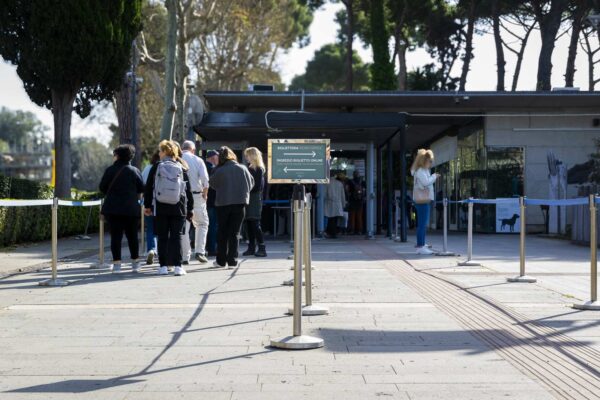
They are near each main entrance, such as Piazza Anfiteatro, Piazza Esedra and Porta Marina.
In addition, there are toilets near the theatres (immediately after the entrance to Piazza Esedra), in the Casina dell’Aquila (accessible by a short flight of steps) and inside the Antiquarium.
These stations, located at various strategic points throughout the site, make it possible to help you plan your itinerary without compromising on comfort.
In short, you can find toilets in these places:
Close to the Entrance of Piazza Anfiteatro
Close to the Entrance of Piazza Esedra (1)
Close to the Entrance of Piazza Esedra (2)
Close to the Entrance of Porta Marina
Close to the Large Theatre and the Odeon
In the Casina dell’Aquila (to get to these bathrooms, you have to take the stairs)
Inside the Antiquarium
One of the main restrooms in the site is located near the Antiquarium—Pompeii’s elegant museum that offers a powerful introduction to the city’s history through stunning artifacts. If you’re nearby, consider taking some time to explore the Antiquarium of Pompeii: it’s a great way to begin (or end) your visit through the ruins.
At the Villa of the Mysteries
Plan Ahead: How Long Will Your Visit Last?
Since restrooms inside the Archaeological Park are not always easy to find, we recommend planning your visit duration in advance.
Check out our guide on how long it takes to visit the Pompeii ruins to organize your time effectively—whether you’re planning quick stops, a full-day itinerary, or breaks for food and rest.
FAQ About Where to Find Public Toilets Inside the Pompeii Archaeological Park
Yes. The public toilets are well distributed in several key locations to ensure easy access for all visitors. They are the most popular attractions near the main entrances (Piazza Anfiteatro, Piazza Esedra, and Porta Marina).
You can access the public toilets in several strategic areas: near the entrance to Piazza Anfiteatro, Piazza Esedra (at two different points), Porta Marina, near the theatre (immediately after the entrance to Piazza Esedra) at the Casina dell’Aquila (accessible via a short staircase), inside the Antiquarium at the Villa of the Mysteries.
Most Pompeii toilets can be reached easily, but some, such as those in the Casina dell’Aquila, involve a short flight of steps. If you have specific accessibility needs, we recommend checking for suitable routes, especially in areas with stairs or steps.
Yes, the use of public toilets in the Pompeii Ruins is included in the admission ticket price. You do not need to pay anything extra to access the toilets in the archaeological park.
You will find signposts within the site, but for a more precise guide, you can use Google Maps by searching for the words “Pompeii public toilets” or “Pompeii public bathrooms”. The coordinates in the article above will help you locate the exact points to save time.
Given the high tourist turnout, maintenance is generally constant to ensure acceptable hygiene standards. However, good practice includes respecting public restrooms, leaving them tidy, and reporting any problems to the on-site surveillance staff.
Indeed, if you prefer disinfectant wipes or sanitising gel with you, you can use them before and after taking advantage of the Pompeii public toilets. Don’t forget, however, to throw your waste in the appropriate containers to help maintain the cleanliness of the archaeological site.