The Villa of the Mysteries is one of the most fascinating remains of ancient Pompeii, located a few hundred meters outside the city’s northern walls.
This suburban residence, buried by the eruption of Mount Vesuvius in 79 AD and unearthed since 1909, offers visitors a unique glimpse into the life and art of Pompeii and Roman culture. If you’re wondering what to see in Pompeii, the Villa of the Mysteries is a must-visit attraction.
Where is it located?
Map of Pompeii: Regio VI – 19
Google MapsHistory of the Villa of the Mysteries
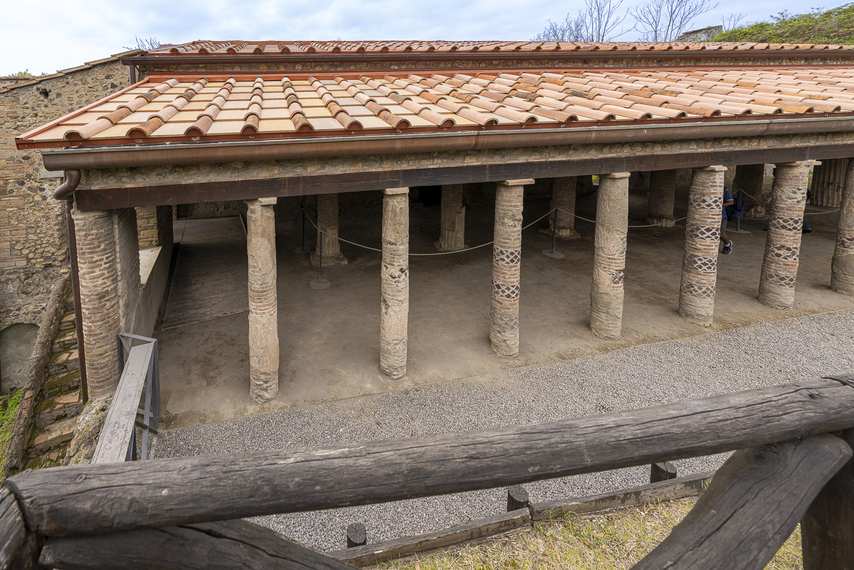
Built in the 2nd century BC, the villa experienced its heyday during the Augustan age. Originally conceived as a luxurious villa of otium, intended for rest and pleasure, it had large rooms and hanging gardens with a panoramic view of the Gulf of Naples.
After the 62 AD earthquake, the villa underwent significant transformations, adapting to more rustic functions with the introduction of equipment for wine production, including grape presses and wine cellars. This evolution reflected the economic and social needs of the time, and today it serves as a fundamental testimony for those visiting Pompeii.
Architectural Description
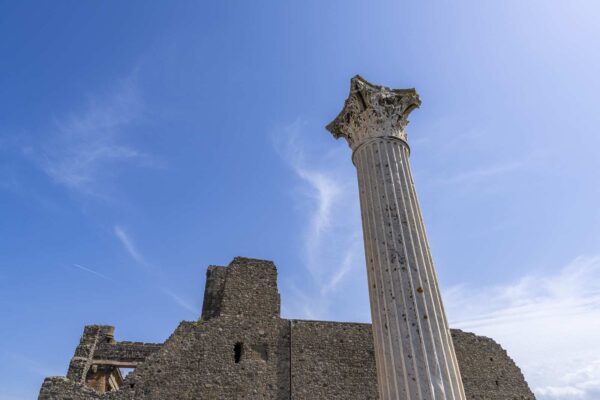
The villa is built on a square plan, resting partly on an embankment and partly supported by a cryptoporticus used for storage. The main entrance led to a stately residential area, articulated around a peristyle with sixteen columns, an atrium decorated with Nilotic landscapes, a tablinum, and an apsidal veranda overlooking the sea.
Surrounding these main rooms were cubicula (bedrooms), a triclinium (dining room), and a thermal quarter, evidence of the luxury and comfort enjoyed by the owners. If you’re unsure what to see in Pompeii, this structure offers a glimpse into the lives of the elite Romans.
The Frescoes of the Triclinium
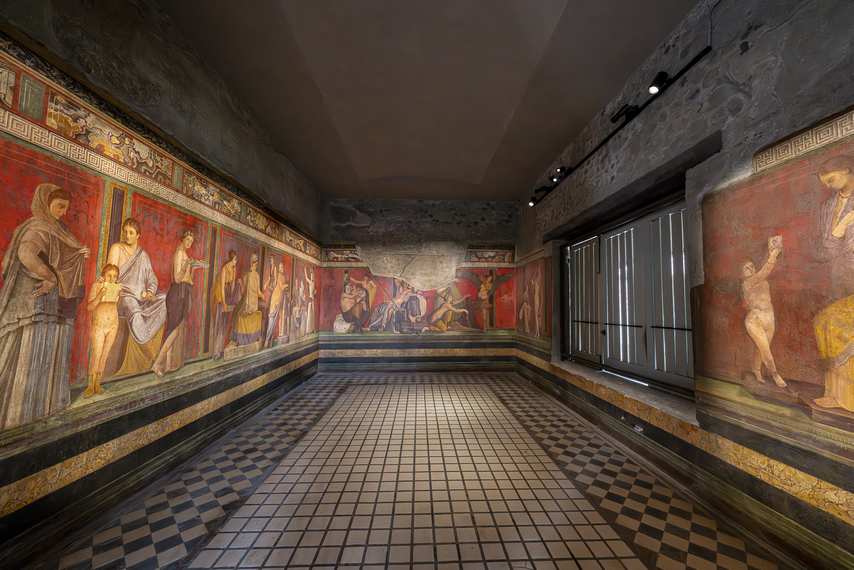
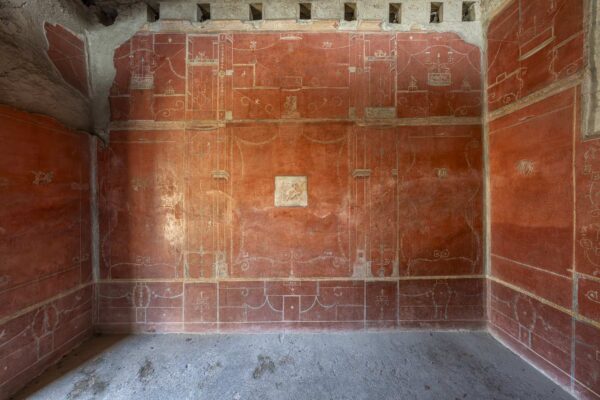
One of the most famous elements of the Villa of the Mysteries is the pictorial cycle, or complex of frescoes that adorn the walls of the triclinium. These paintings, created in the first century B.C., depict life-size figures in a narrative sequence that has prompted numerous interpretations.
The most widely accepted theory suggests that the frescoes here depict an initiation rite into the mysteries of Dionysus, a secret cult dedicated to the god. The scenes show a young woman going through various ritual stages, accompanied by mythological figures such as satyrs and maenads, culminating in a depiction of Dionysus in the arms of Ariadne.
The vivid colours and artistry make these frescoes a masterpiece of Pompeii and Roman art.
Meaning of the Frescoes
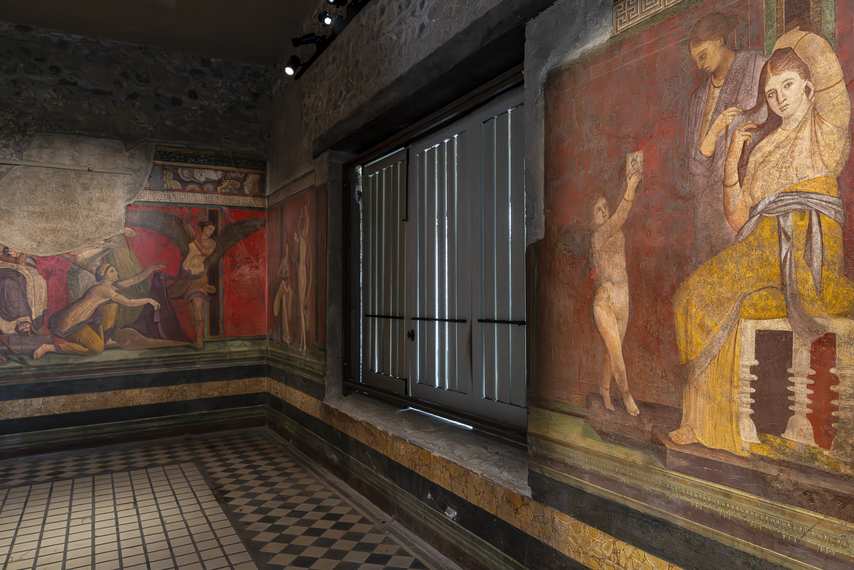
The frescoes in the triclinium have been the subject of numerous interpretations. The most widespread interpretation sees the scenes depicted as a rite of initiation into the Dionysian mysteries, secret ceremonies dedicated to the god of wine and ecstasy.
This interpretation is supported by mythological figures linked to the cult of Dionysus, such as satyrs and maenads, as well as symbolic elements like the thyrsus and phallus, which are associated with fertility and renewal. Some scholars, however, have proposed alternative readings, seeing in the frescoes a depiction of preparations for a wedding or a celebration of mystery cults in general.
Restoration and Conservation
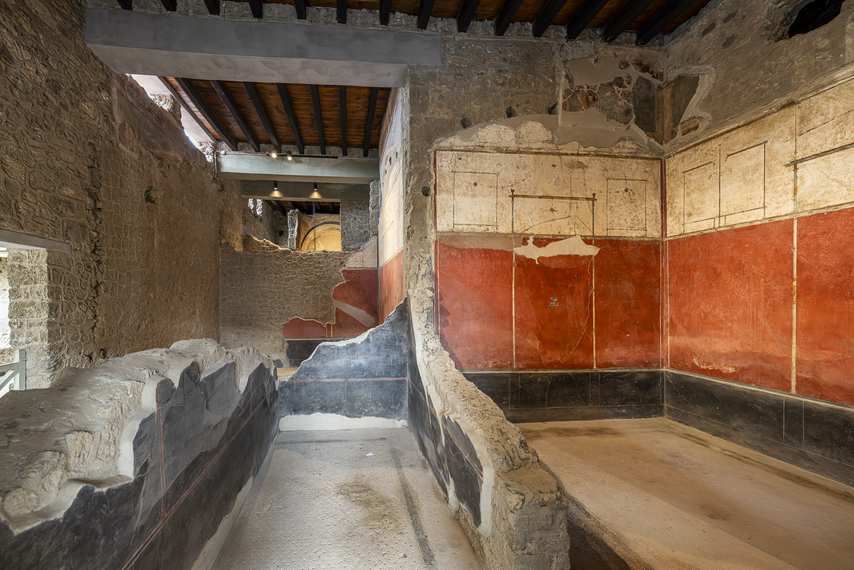
Since its discovery, the Villa of the Mysteries has undergone several restoration efforts to preserve its structure and frescoes. Between 2013 and 2015, substantial work was carried out to restore the original brilliance of the wall paintings, allowing visitors to fully appreciate the beauty and complexity of the decorations.
These interventions employed advanced techniques, including antibiotics to eliminate harmful microorganisms and lasers to remove wax and oil residues from previous restorations.
Visit to the Villa of the Mysteries
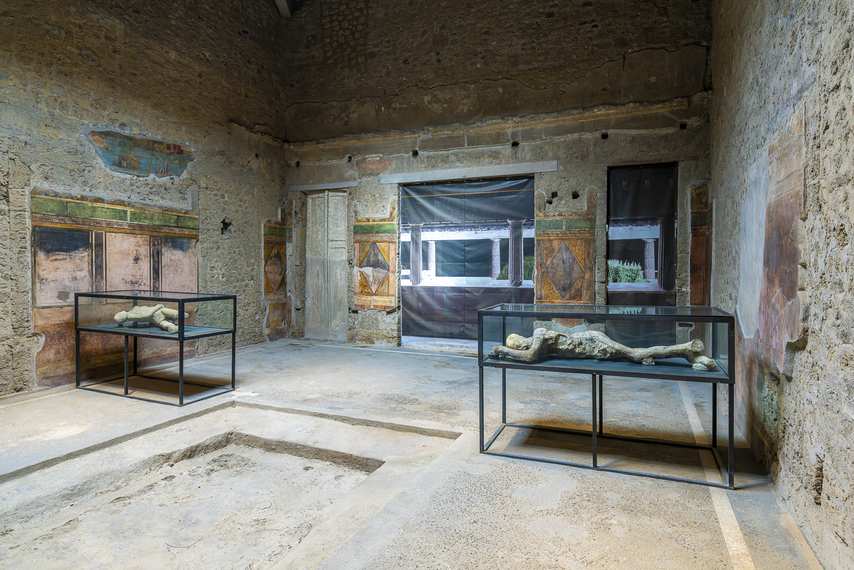
A visit to the Villa of the Mysteries is one of the must-see stops for those visiting the Pompeii Archaeological Excavations. Its location, slightly set back from the centre of the ancient city, offers a quieter atmosphere, allowing visitors to immerse themselves in Roman history and art away from the crowds.
The triclinium frescoes, in particular, are a significant attraction, offering a unique glimpse into the rituals and beliefs of the time. For a complete visit, we recommend spending at least 45 minutes exploring the villa, dwelling on the main rooms and wall decorations.
Curiosities
Origin of Name: The name “Villa of the Mysteries” derives precisely from the enigmatic triclinium frescoes, the exact meaning of which remains a matter of debate among scholars to this day.
Pictorial Technique: The frescoes are created using the megalographic technique, characterised by the depiction of life-size figures, a rarity in Roman art.
Panoramic View: In Roman times, the villa offered a breathtaking view of the Gulf of Naples, an element that added prestige and value to the residence.
Visiting Tips
- Length of visit: Spend at least 45 minutes exploring the villa and appreciating its extraordinary decorations.
- Accessibility: The area is accessible by a short walk from the main entrances of the Pompeii Archaeological Site.
- Recommended guide: To fully understand the meaning and details of the frescoes, consider a guided tour of Pompeii that delves into the history of the villa and the mystery rites depicted.
- Hours and tickets: Always check Pompeii’s opening hours and purchase your Pompeii tickets in advance to avoid long waits. Remember that to visit the Villa of the Mysteries, you need to select the “Plus” ticket, which includes admission to this site.
- It’s advisable to bring water, a hat, and comfortable shoes, especially during the summer months.
Why Visit the Villa of the Mysteries?
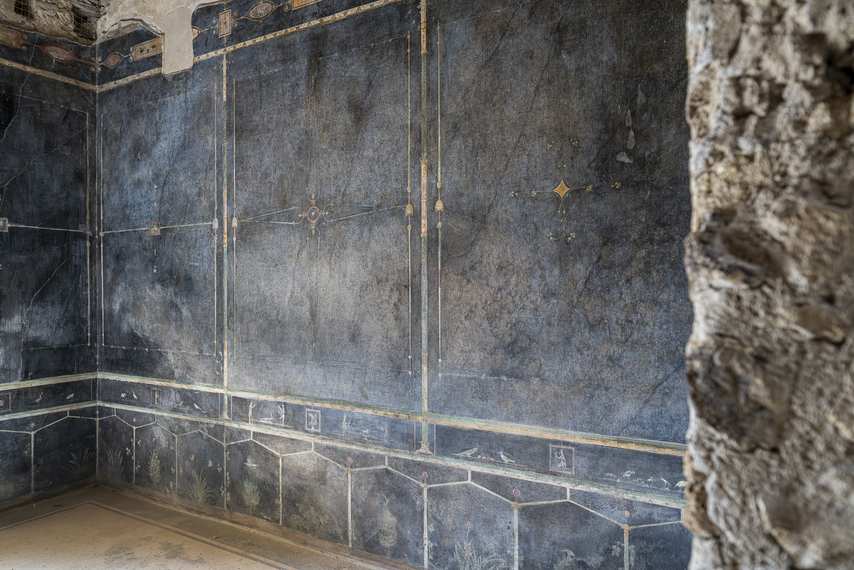
The Villa of the Mysteries is a must-see for anyone visiting the Pompeii Park, where history, art, and spirituality are uniquely intertwined.
Famous for its extraordinary cycle of frescoes, considered one of the most important in the ancient world, the villa offers an evocative and intimate experience, quite different from the more crowded structures of the archaeological site. Its elegant rooms, set against a fascinating scenic backdrop, recount Roman times’ daily life and mystical beliefs, offering a profound contact with the past.
Whether you are an archaeology enthusiast, art lover or simply curious, visiting the Villa of the Mysteries will enrich your exploration of Pompeii with excitement and wonder.
FAQ About the Villa of the Mysteries in Pompeii
The Villa of the Mysteries is a suburban residence in the ancient city of Pompeii, located a few minutes’ walk beyond the northern walls. Built in the 2nd century B.C. and renovated after the 62 A.D. earthquake, it represents a unique example of a Roman villa d’otium, where luxury, art, and spirituality come together. It is especially famous for the frescoes in its triclinium, which is known as one of the finest pictorial cycles in Pompeian art.
The name comes from the enigmatic triclinium frescoes, which many scholars have interpreted as representing the mystery rites dedicated to Dionysus. The term “Mysteries” refers to the secret nature of these cults: the ceremonies and rituals were revealed only to initiates, which adds to the fascination and mystery of the splendid wall paintings.
The paintings, created in the 1st century B.C., depict life-size figures in various scenes. The most widespread interpretation links them to an initiation rite into the cults of Dionysus, the god of wine and ecstasy. Some mythological figures, such as satyrs, maenads, and fertility-related symbols, suggest strong religious and spiritual content. However, alternative readings see them as wedding preparations or other ritual celebrations.
Triclinium: the centrepiece of the visit, with the famous intensely colored frescoes.Peristyle: a courtyard surrounded by columns, typical of Roman villas.Atriums and cubicula: bedrooms and private rooms, decorated with wall paintings.Thermal quarter: evidence of the luxury that characterised the villa, equipped with heated spaces dedicated to wellness.
Initially conceived as an otium villa overlooking the Gulf of Naples, the Villa of the Mysteries underwent modifications after the earthquake to meet more practical needs. Equipment for wine production, such as wine presses and wine cellars, was introduced, transforming part of the residence into an activity related to agriculture and trade.
Thanks to its world-famous frescoes, it represents a privileged window into the life and religious beliefs of the Roman elite. It offers a more intimate atmosphere than the crowded areas of the Pompeii Ruins, providing a unique view of culture and luxury in the ancient city.
It is advisable to allow at least 45 minutes for the visit, taking time especially in the triclinium and the main decorated rooms. From the Forum of Pompeii, follow Via Consolare towards Porta Ercolano, then continue along Via delle Tombe. Signage for the Villa of the Mysteries is marked along the route.
If possible, join a guided tour or use an audio guide to understand the meaning of the Dionysian Mysteries fully. Avoid rush hour: visiting the villa at less crowded times allows you to quietly appreciate the details of the paintings and take unhurried photos. Pay attention to the original colours, which have returned to light after recent restorations that removed wax buildup and deposits.
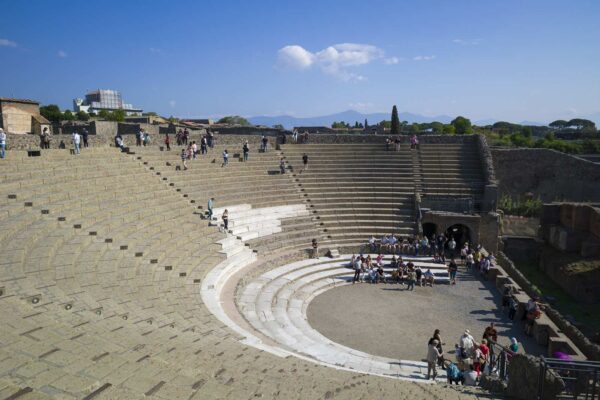
Although located slightly outside the city core, the villa is an integral part of Pompeii’s Archaeological Heritage, enriching the itinerary with an example of a suburban dwelling. Completing the visit with the Forum, Amphitheatre, and several frescoed domus within the walls provides a complete picture of the time’s social, economic, and religious life.
The combination of Roman architecture, unique frescoes, and a tranquil atmosphere makes it one of the most remarkable sites in the Pompeii Excavations. In addition to classic attractions such as the Lupanar or the House of the Faun, this place allows visitors to immerse themselves in a mix of mystery, art, and history, making visiting Pompeii even richer and more unforgettable.